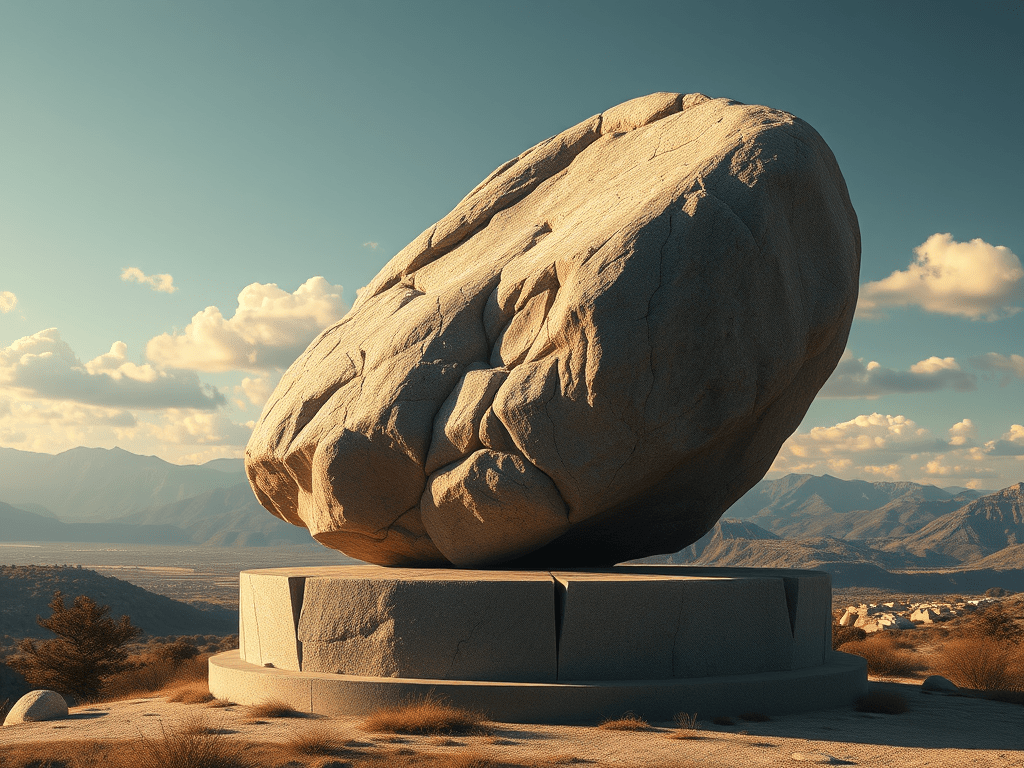
“Can God build a rock too large for Him to move?”
This well-known question is often raised as a supposed paradox to challenge the idea of God’s omnipotence. At first glance, it seems clever: if God can create such a rock but cannot move it, then there is something He cannot do; if He cannot create it, then again there is something He cannot do. Either way, it appears to limit God’s power.
However, this paradox is based on a misunderstanding of divine omnipotence. Scripture and Christian theology affirm that God can do all things (Matthew 19:26), but this does not mean He can act against His own nature or engage in logical contradictions. For example, God cannot lie (Titus 1:2), cease to be holy, or create a “square circle.” These are not limits on His power but affirmations of His perfect consistency and character.
Creating a rock too heavy for Him to move would fall into this category of logical absurdities. It is not a true “thing” to be done, but rather a meaningless contradiction. God’s omnipotence means He can accomplish all things that are consistent with His will, His nature, and the reality He has made. Asking whether God can create such a rock is like asking whether He can stop being God—something that denies His very essence.
Furthermore, God cannot be manipulated or “cajoled” by human reasoning into acting outside His purpose. He is sovereign and wise, and His actions flow from His holy will, not from the traps or paradoxes devised by human imagination.
In conclusion, the so-called paradox is irrelevant because it is not a genuine limitation on God’s power but a misuse of language and logic. Rather than diminishing God, it reminds us that His omnipotence is not chaotic or self-contradictory but perfectly aligned with His holy character and eternal purposes.
 Stand Firm!